


Driving Partner Success: An Interview with Klaus Burgstaller
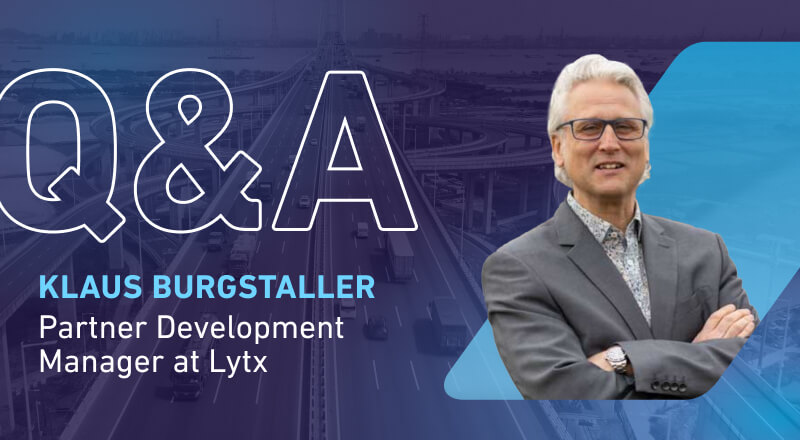
We sat down with Lytx®’s partner development manager, Klaus Burgstaller, to explore his perspective on telematics and safety innovations in the DACH region. Klaus talks to us about the challenges that commercial vehicles now face, how video and telematics technologies have evolved to support safety, and where the biggest opportunities lie for partners and fleets.
Tell us about your career journey and role at Lytx
"I've been living and breathing technology and telematics for the past 15 years, working for brands such as Webfleet, TomTom Bridge, Honeywell and TACHOfresh. I’ve seen huge changes in the way fleets use telematics technologies and apply the data they have derived from them. Where a tachograph was once the only technology in the vehicle, we’re now seeing fleets demand real-time insights to help keep drivers safe.
A vital part of my role at Lytx is to help telematics service providers (TSPs) navigate those technologies and take advantage of the opportunities offered by video. Ultimately, this is about helping more fleets to implement solutions that help keep drivers safe and share our vision where every journey ends with a safe return."
How have you seen the telematics industry evolve?
"One of the biggest advancements I’ve seen is the introduction of technologies that can identify distracted behaviours – and other types of risk – before they progress to something more dangerous. One major reason for this has been the rise in incidents caused by distraction which is particularly prevalent in Germany for both commercial drivers and everyday road users.
Traditional telematics systems provide information gathered from G-force readings, such as sudden braking or impact. Although this gives some indication of risk, it only provides information about events that have already happened, without any insights. Distraction, for example, such as when a driver is using a mobile phone or smoking, will not be spotted by traditional telematics systems until it has caused a driver to swerve or brake. By this time, it may be too late. In contrast, intelligent video can detect when a driver is becoming distracted and alert them in real time so that they can regain concentration and prevent an incident from happening at all."
What are some of the biggest challenges that commercial vehicles face today?
"Countries like Germany are more privacy-conscious and driver acceptance can be an initial concern. But configurable solutions and greater collaboration between fleet managers and drivers are helping to ease this.
With a configurable solution, fleets can adapt the extent of video capture. This includes taking advantage of features such as face and number plate blurring or opting for non-continuous recording so that footage is only captured when triggered by an incident. It may also mean that a system can be configured so that managers are only notified if a risky behaviour repeatedly occurs.
Close collaboration with drivers involves constant communication about any new system and complete transparency about the data that is being gathered. Drivers need to know exactly what the fleet manager will see and to receive clear answers to any questions that they may have. An open communication channel also provides an opportunity to demonstrate some of the ways in which telematics can help drivers. When it comes to keeping drivers safe at work and protecting them from blame if an incident occurs, you can’t beat video! This story from Geotab and 3 Sisters Logistics is a powerful testament to that."
What do you see as the biggest opportunities in the DACH region?
"One of the biggest opportunities for fleets is technology that can serve multiple benefits. Often, fleets will implement a new system or solution based on one primary objective, such as improving safety and reducing incidents. Having a clear and measurable goal is vital but fleets also need to consider how technology can benefit other areas of the business. This could be related to sustainability and progressing Net Zero goals, as well as cost efficiencies and reduced insurance claims.
The good news is that these often go hand in hand. A great example of this is the work we’ve done with insurance companies like RSA and one of their HGV fleet clients. After installing Lytx Surfsight® AI-12 dash cams, the fleet was able to improve driver safety and reduce incidents significantly. This also created overall cost efficiencies with claims in the 12 months after the technology was installed, falling by a substantial 21%."