


Road Safety Trends for Fleet Managers in 2026
Summary
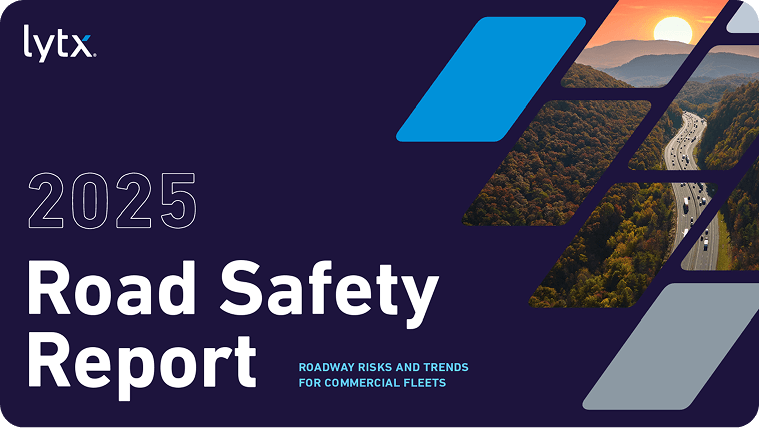
This blog post provides an in-depth analysis of the Lytx® 2025 Road Safety Report, highlighting key trends, statistics, and actionable insights for fleet managers. It covers collision trends, behavioral shifts, weather-related risks, and industry-specific challenges, while emphasizing the importance of proactive safety measures. Readers will learn how a fleet safety solution, like Lytx, can help mitigate risks with video safety, advanced telematics, coaching, and real-time alerts†. The post also includes FAQs, key statistics for fleet managers, and practical takeaways to improve fleet safety and efficiency.
Americans drove a record 3.3 trillion miles on U.S. roads in 2024, according to the U.S. Department of Transportation. This surge reflects economic growth and a return to pre-pandemic mobility, but it also introduces new risks for fleets. Persistent aggressive driving habits, congestion, and weather-related hazards are reshaping the safety landscape. At the same time, drivers have become more distracted than ever.
Lytx analyzed over 300 billion miles of driving data from 5.5 million commercial drivers to uncover trends no one else can. Our 2025 Road Safety Report provides actionable insights to help fleets navigate these challenges.
Why Road Safety Matters to You
As a leader in your organization, you’re trying to understand what challenges your fleet faces every day on the road. Your drivers, equipment, and reputation are all impacted by trends in road safety.
As the report reveals, traffic volumes are up, the pace is faster, and behaviors have changed – often for the worse. Speeding and tailgating remain common, even as congestion slows average speeds. These shifts create conditions for rising collision rates that, disrupt operations, and drive up costs.
Key Highlights
- Collision rates climbed 24% since late 2023
- Low-severity crashes are rising as roadways become more crowded
- Construction and utilities industries saw the steepest collision increases
- Near collisions also surged, especially in urban areas during peak hours
- Tailgating and speeding were the top contributors to risk
Top 3 Risk Factors
- Following distance less than 2 seconds (+19%)
- Speeding (+7%)
- Eating and drinking (+9%)

Road Safety Statistics for Fleet Managers
- 3.3 trillion miles were driven on U.S. roads in 2024
- Collision rates increased 24% since Q4 2023
- 35% increase in collision rates for construction fleets
- 22% increase in collision rates for utilities fleets
- Near collisions were up 47% for utilities and 40% for construction fleets
- Drivers in foggy conditions are 2.8x more likely to be involved in a severe collision

Weather’s Impact on Road Safety
Weather remains one of the most underestimated risk factors. According to the Federal Highway Administration, 21% of crashes involve adverse weather. Fog alone makes drivers 2.8x more likely to be involved in severe collisions.
Winter driving is twice as risky as other seasons. Behaviors like driving too fast for conditions, running red lights, and inattentiveness at intersections amplify collision risk in poor weather.
Industry-Specific Risks
Construction Fleets: Collision rates jumped 35%. These vehicles often operate in congested urban areas, navigating tight spaces and unpredictable traffic patterns. Heavy equipment and frequent stops add complexity, making defensive driving and situational awareness critical.

Utilities Fleets: Collision rates increased 22%. Drivers frequently work in residential neighborhoods and high-traffic zones during peak hours. Emergency response calls and time-sensitive repairs can lead to rushed driving behaviors, increasing exposure to risk.

Impact on Fleets
Driving trends have direct operational and financial consequences: Higher collision rates mean worker injuries, increased insurance premiums, claims costs, and downtime. Near collisions and low-severity crashes disrupt schedules and strain resources. Fuel inefficiency from aggressive driving and unnecessary idling adds costs.
Why it matters: Without proactive safety measures, these trends can erode profitability and put drivers at risk. A robust fleet safety solution isn’t optional — it’s essential.
How Lytx Helps
Lytx offers industry-leading video telematics and fleet safety solutions designed to prevent risky behaviors before they lead to collisions. By combining data-driven insights with in-cab alerts, Lytx empowers fleets to stay ahead of risk, versus simply reacting to it. These solutions include:
- Real-time alerts†
- AI-powered risk detection
- Structured coaching workflows
- Video evidence
- All-in-one fleet management solution
In 2024, fleets using Lytx technologies achieved:
- 8.7% reduction in time spent speeding per vehicle
- $22M in fuel savings
- 110M pounds of CO₂ emissions prevented
- $1.8B saved on claims costs
- $521M savings on maintenance
Dynamic Risk Technology: A Game-Changer for Fleets
Lytx Dynamic Risk technology takes fleet safety to the next level by adding environmental context to driver behavior analysis. Here’s how it benefits fleets facing today’s unpredictable conditions:
- Real-time awareness: Combines machine vision, AI, and regional weather data to deliver †alerts about changing conditions before they escalate
- Context-aware scoring: Layers environmental data on top of driver behavior to produce a weighted score that reflects true risk severity
- Proactive hazard management: Helps fleets be more prepared for the chaos drivers face on the road
- Fairer coaching: Adds context to behavior scores, improving trust and engagement
- Operational savings: Avoiding even one weather-related accident can save fleets $200,000–$300,000 in damages and liability costs***
FAQs
What were the riskiest U.S. states to drive in 2024?
| Rank | State |
|---|---|
| 1 | California |
| 2 | Texas |
| 3 | New York |
| 4 | Florida |
| 5 | New Jersey |
What were the riskiest U.S. metro areas to drive in 2024?
| Rank | Metro Area | State |
|---|---|---|
| 1 | New York | New York |
| 2 | Los Angeles | California |
| 3 | Dallas/Fort Worth | Texas |
| 4 | Chicago | Illinois |
| 5 | Washington D.C. | Washington D.C. |
When is driving most dangerous?
- Tuesdays are the riskiest day in the U.S.
- Peak risk: 11 AM – 3 PM, especially around 2 PM.
- Holidays like New Year’s Eve and Christmas see a 12% spike in collisions.
What are the riskiest days of the year to drive?
New Year’s Eve proved to be 2024’s riskiest day (and holiday) to drive in the U.S.
Christmas Day (2023’s riskiest day and riskiest holiday to drive) came in as a close second.
With both holidays, multiple factors contributed to amplifying risk, such as winter weather conditions and more people traveling to gatherings where drinking may be common.
There’s a +12% increase in collisions on major U.S. holidays compared to the same day of the week and the rest of the year.

Why are collisions increasing?
Increase traffic volume leads to increased congestion and subsequently, reduced following distance. Without the necessary following distance buffer, more collisions occur. Other recent driver behavior trends, like increased road rage, also contribute to a rise in collisions.
What are collision severity levels?
| Level 1 | High crash severity |
| Level 2 | Moderate crash severity |
| Level 3 | Minor crash severity |
| Level 4 | Low crash severity |
Which industries face the highest risk?
Construction and utilities, due to dense urban navigation and tight schedules.
How can fleets reduce risk?
Early coaching, in-cab alerts, and recognition of safe driving are proven strategies. Fleet safety solutions like Lytx can help identify and prevent risk, and provide efficient coaching workflows to help correct risky driving behaviors.
What role does weather play in collisions?
Fog, snow, and rain significantly increase risk. Fog alone makes severe crashes nearly three times more likely.
Are near collisions always bad?
Not necessarily. They can also indicate when drivers are taking proactive measures to avoid crashes.
How does Lytx technology help during poor weather?
Real-time alerts† and AI-driven monitoring help drivers adjust speed and following distance, reducing risk in adverse conditions. Lytx also provides severe weather alerts within a configurable area that suits your fleet’s needs.
Read how Lytx helps with Dynamic Risk.
***This is based on customers’ view in the carrier industry. Results may vary by customer.