


How Field Services Fleets Earn Union Trust on Video Safety

A utility technician gets rear-ended at an intersection by a driver who runs a stop sign. No injuries, but significant damage to both vehicles. The other driver files a claim against the fleet, saying the technician failed to yield. Word against word. Then the incident video rolls. The footage shows the technician had the right of way and was already braking before impact. The fleet submits it to the insurer. The technician is cleared. The claim is closed.
That's the kind of outcome video safety is built to deliver. It's also the kind of proof union representatives need to see early — before a rollout begins, not after. For field services fleets, where many workers operate under collective bargaining agreements, the way you introduce video safety often matters as much as the program itself.
Union misalignment is one of the most common reasons video safety rollouts stall, contracts get delayed, or pilots derail. But there are well-documented practices that can change that and get the union on board. Here's how to apply them.
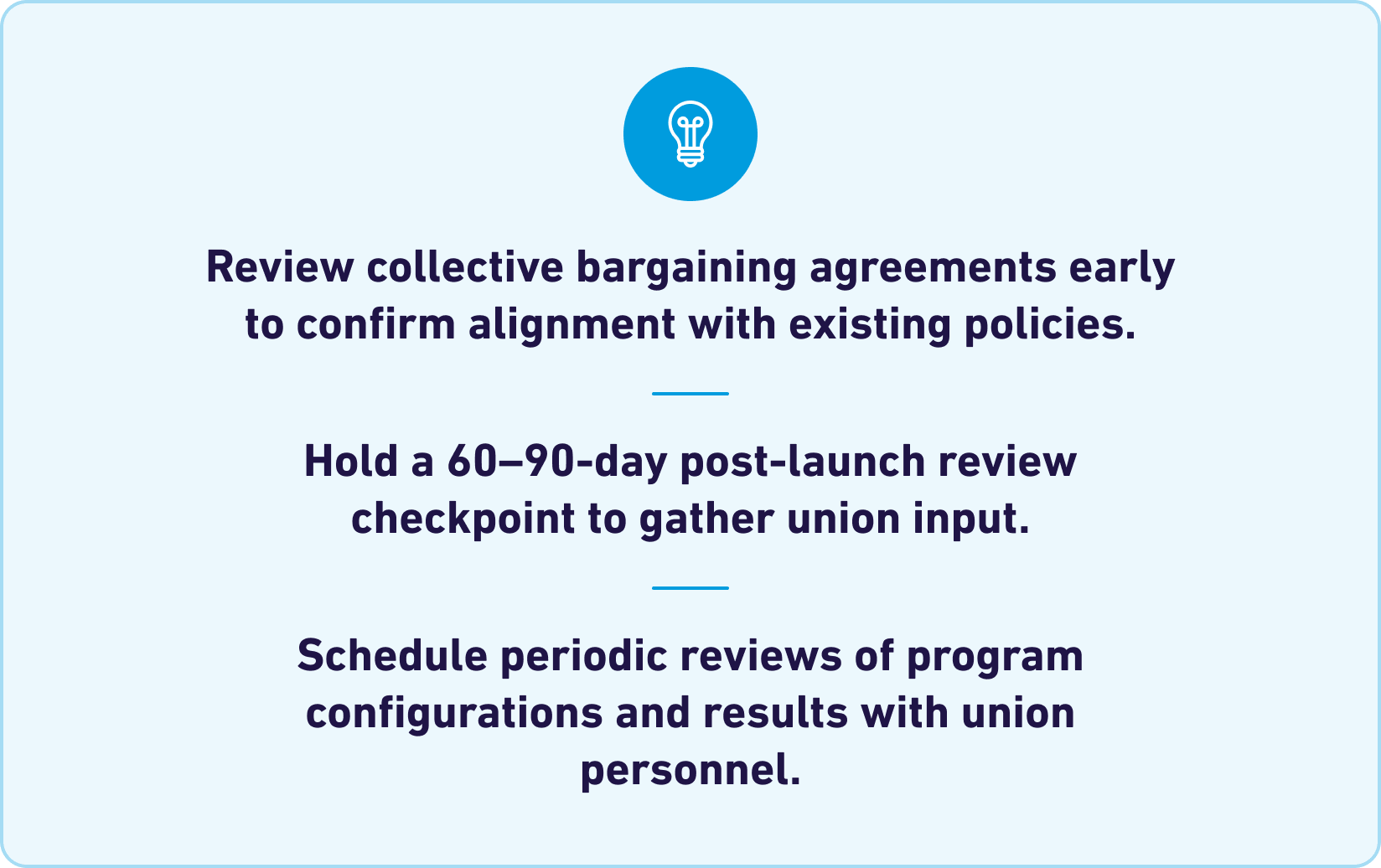
Talk to the union early, and keep talking
The fleets with the smoothest rollouts open the lines of communication with union representatives early, and keep those conversations going. Most unions are familiar with video safety in general, but individual representatives may not understand how a specific program is designed or benefits members. Without that context, sensitive conversations land on the fleet alone, and adoption stalls.
A few habits help:
In those conversations, emphasize what the Lytx® Driver Safety Program is built to do: protect drivers and improve safe driving skills; support coaching rather than surveilling or punishing; deliver data-driven and objective insights; flex to your fleet; and help reduce risk, claims, and performance issues.
Get ahead of the most common union objections
When union concerns surface late, they delay rollouts or stall them altogether. Anticipating the top objections is one of the most useful things a fleet leader can do.
"This is surveillance."
The program is highly configurable, and can be set to preserve video only when triggered by specific driving events. Trained analysts review key events before anything reaches the fleet. Be clear about what video will not be used for: productivity or time-on-task monitoring, general surveillance, minor rule enforcement unrelated to safety, or expanded uses without advance union notice.
"It will be used for discipline."
A 14–30-day grace period during rollout signals that early use is focused on coaching and adjustment, not punishment. It also gives the fleet time to refine what the program tracks. Build in clear discipline guardrails: prohibit video-only discipline, require human review and context, align with your existing progressive discipline policy, and provide driver and union access to footage used in decisions where applicable.
"Drivers don't benefit."
Point to exoneration stories like the utilities technician above. Share real cases where video has cleared drivers from false claims and prevented unfair discipline. Driver protection is a central benefit of the program, not a secondary one, and putting driver well-being at the center of the conversation is what shifts perceptions.
"This conflicts with our collective bargaining agreement."
Proactively review collective bargaining provisions and existing policies before rollout, and position the program as a tool that reinforces current policies rather than replacing them.
Build privacy and review processes drivers can trust
Inflexible, one-size-fits-all video tools are what unions typically reject. The Lytx Driver Safety Program is built to flex to the fleet, with configurable privacy by design, risk detection without video recording, optional in-cab and audio recording, blurring and concealment services, geofencing controls, and strict user access controls and data security.
Event reviews matter just as much. Trust grows when drivers and union representatives can see that:
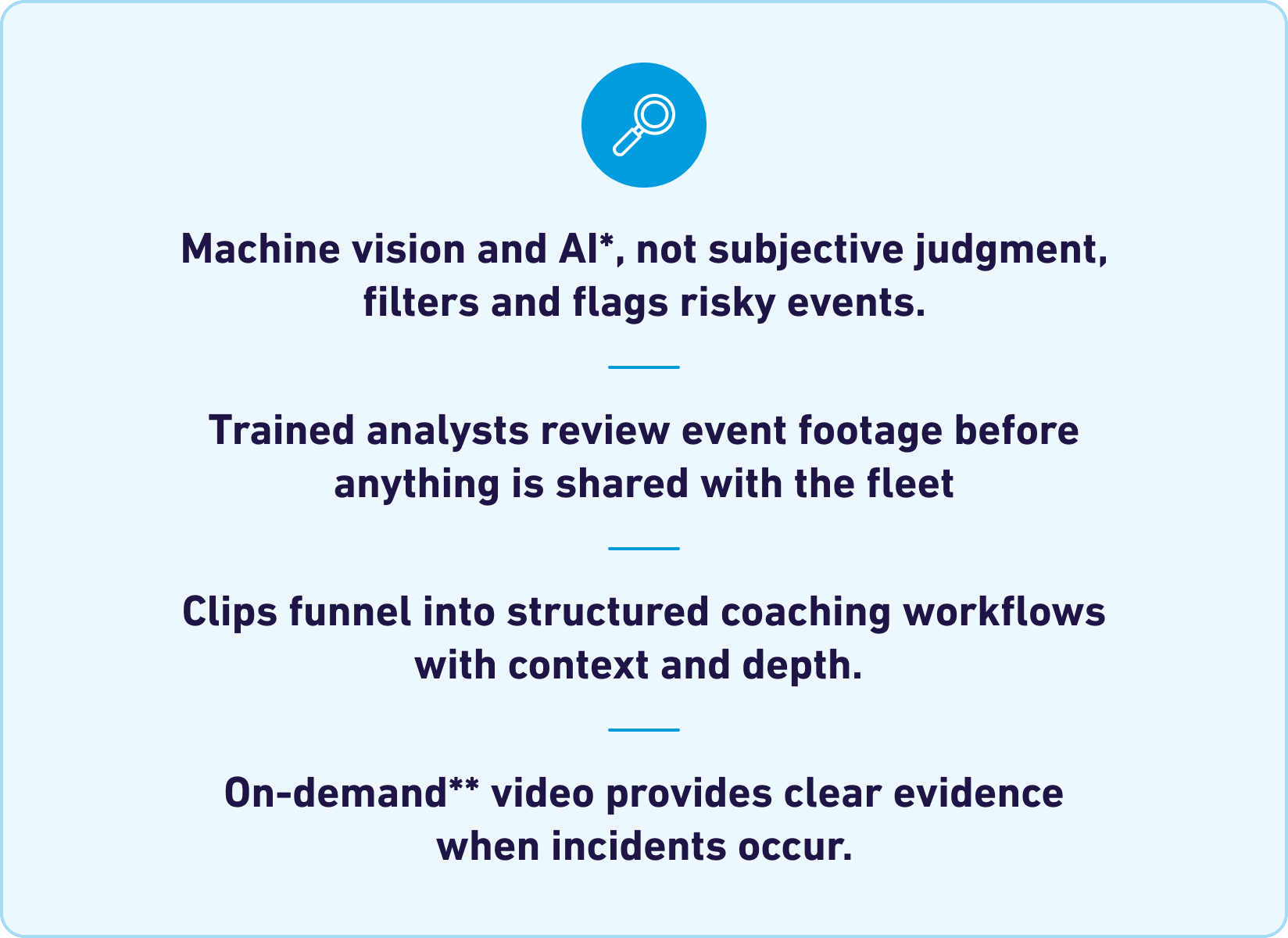
A best practice that often tips the scales: Proactively outline how grievances will be handled, including who reviews contested events and how disagreements get escalated and resolved.
Show drivers what's in it for them
The case for the program lands hardest in the data. A utilities fleet reduced collisions by 94% and lowered avoidable near-collisions by 84% after rolling out the Lytx Driver Safety Program. A transit company cut claims costs by $174K and saw a 75% reduction in incidents of risky behavior in its first year. These aren't promises. They're what comparable fleets have seen, and for union conversations, that kind of proof carries more weight than any spec sheet.
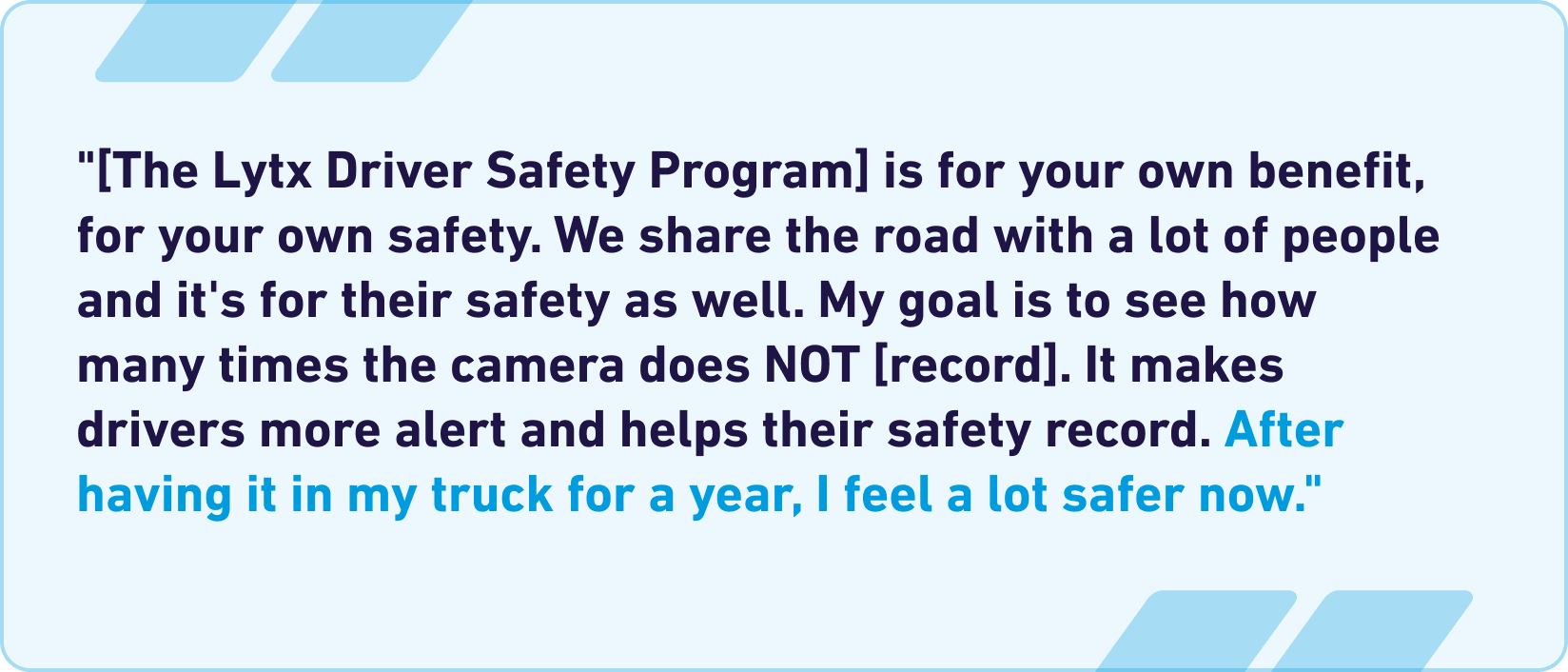
The driver perspective lands even harder. As one Teamster driver at a large industrial gases distributor put it:
Make union support part of your rollout plan
Successful video safety rollouts in unionized fleets come down less to the technology and more to leadership, trust, and execution. Get the full playbook, which includes best practices for opening union conversations, responses to the toughest objections, the complete internal communications checklist, and a discussion aid you can bring to your next labor meeting. Download “Building Trust with Unions & Drivers During Video Safety Rollouts.”
*The MV+AI technology and associated services are a driver aid only. Drivers should never wait for a warning before taking measures to avoid an accident. See www.lytx.com/legal/driver-information**Subject to available cellular network connectivity.