


Introducing Self-Coaching: Giving Drivers More Ownership of Safety
New coaching tool from Lytx® gives drivers guided feedback and managers more time for high-impact coaching.

Drivers are at the center of every safety program, but they do not always get feedback in the moment when it can make the biggest difference. For lower-severity events, drivers can benefit from a faster, more direct way to review what happened, understand the behavior, and take ownership of small changes before they become bigger risks.
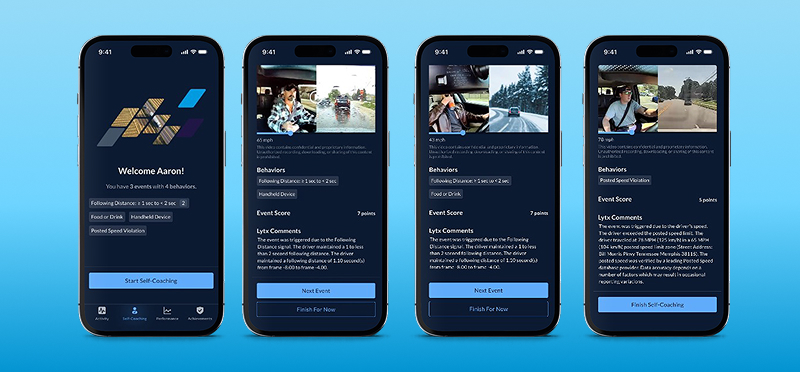
That’s why Lytx has released Driver Self-Coaching, a new tool that routes eligible lower-severity behaviors to short, guided workflows in the Lytx Driver App. Drivers get timely feedback and more ownership. Managers get more time for high-impact coaching. Fleets get a more scalable, consistent way to support safer driving.
A Smarter Take on Self-Coaching
Driver Self-Coaching is not hands-off, AI-only, or a replacement for human coaches. It gives fleets a governed way to route routine behaviors directly to drivers while keeping higher-risk, repeated, or serious behaviors with managers—where judgment, context, and human connection matter most.
That governance carries through the coaching experience itself. Each session walks the driver through a guided, step-by-step workflow and closes with the driver's acknowledgment of the coaching session and the behaviors involved. Screenshot protection keeps each coaching session contained to the app, so driver video and data stays private, not exposed online. And optional review questions turn a quick watch into a moment that sticks. The result is a workflow that respects the driver and holds up to scrutiny for the safety manager.
How Driver Self-Coaching Works
When an eligible event is assigned to self-coaching, the driver receives a guided workflow that encourages awareness, reflection, and self-correction. Drivers can review the event, understand the behavior, and acknowledge what they learned.
AI helps determine the right coaching path for each event, so routine moments are handled efficiently, and manager-led coaching is preserved for the conversations most likely to drive lasting change.
Customers can configure an escalation threshold so that if a driver doesn't complete self-coaching within a defined timeframe, the event automatically escalates to a manager-led coaching session.
Why it Matters for Fleets
For safety managers, Driver Self-Coaching helps reduce coaching backlogs without lowering program standards. By streamlining routine feedback, managers can focus on high-risk incidents, recurring behaviors, and the conversations that require a human touch.
For drivers, it creates more autonomy and accountability. Instead of waiting for every lower-severity event to become a scheduled coaching session, drivers receive timely, guided feedback that helps them recognize small issues before they escalate.
For fleet leaders, the tool supports a more scalable, consistent, and defensible coaching model, with clear routing logic and governed workflows that help ensure coaching is applied fairly across the organization.
Built Around the Coach-Driver Relationship
The best coaching programs are built on trust, accountability, and meaningful conversations. Driver Self-Coaching strengthens that relationship by helping managers focus their time where it can have the greatest impact.
When manager-led coaching happens less often but at the right moment, it carries more weight. Drivers know the conversation matters, and managers can make it more focused and actionable.
The New Coaching Paradigm
Driver Self-Coaching is part of Lytx’s broader evolution of safety coaching: a new paradigm that combines AI, driver ownership, positive reinforcement, and human coaching to improve safety at scale.
- Driver Self-Coaching (available now) — Mobile tools that help drivers review and learn from events
- Coach Assist (available now) — Generative AI support that helps managers prepare faster for coaching conversations
- Balanced Feedback (available Q3/Q4) — Positive recognition that reinforces safe behaviors
- New Driver Safety Score (available Q3/Q4) — Clearer insight to help drivers and managers focus on what matters most
Together, these capabilities create a smarter coaching model: one that uses technology to strengthen human coaching, not replace it. Routine feedback becomes faster and more consistent. Driver engagement becomes more active and accountable. Manager-led conversations become more focused and meaningful. The result is a safety model that is automated where it should be and human where it matters most.
Backed by Research
Further supporting the importance of effective coaching methods, new research from UCSD shows that:
- Manger-led coaching outperforms other methods, but coaches are often strained by time and logistical challenges.
- Personalized coaching “enhances intrinsic motivation” for drivers and helps them to make long-term improvements.
- Effective coaching “positively shapes organizational culture,” improves morale among drivers, and helps to reduce driver turnover.
- Using AI to support in-person coaching “optimizes scalability and personalization, allowing managers to focus strategically.”
Driver Self-Coaching is available now to all Lytx Driver Safety Program customers. To learn more, visit: www.lytx.com/fleet-safety