


One System, One Answer: Field Services Fleets Rely on Defensible Truth
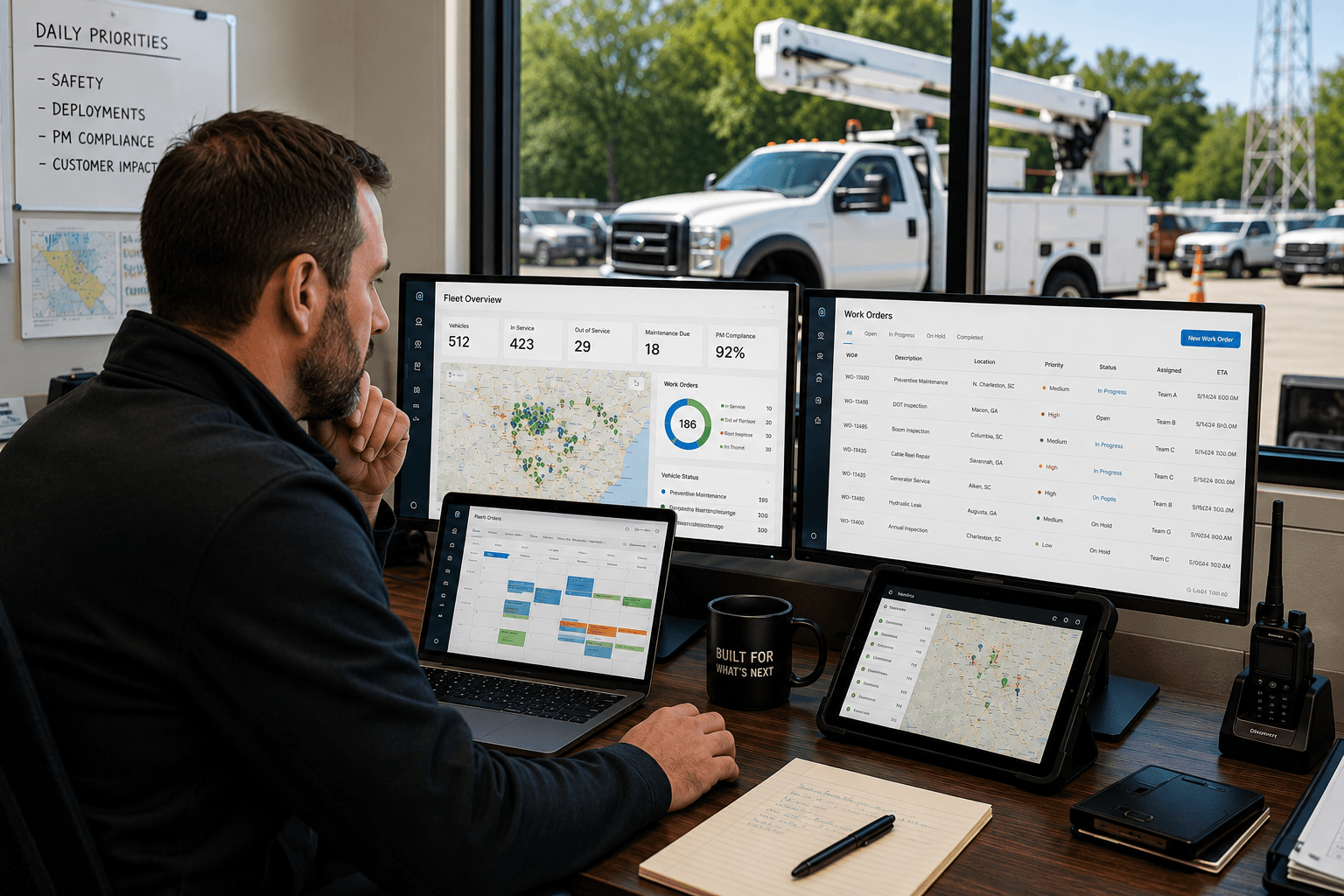
A customer calls Friday afternoon. They say a service truck clipped a mailbox on Wednesday morning around 10 a.m. on a residential street in the next county. The dispatcher remembers the route but isn’t sure which crew was assigned. The video vendor has footage, but the timestamps drift by a few minutes. The telematics platform confirms a vehicle was in the area but says nothing about how it was being driven. The coaching report shows the most likely driver has not had a session since the start of the quarter. The various data is leading to more questions than answers. By the time any answers arrive, it’s Monday afternoon. Two managers spent the better part of the morning on it. The answer is still inferred, not verified.
This is an evidence problem. The fleet has plenty of technology, plenty of data, and no fast path from any of it to one verified answer. It is also the reason a growing number of Field Services fleets are consolidating fragmented systems into a single safety and operations record.
Five Systems, No Answer
Field Services fleets running 200 vehicles or more typically operate across three to seven separate platforms, accumulated over a decade of separate solutions bought to fix problems one at a time. Telematics for location. A dash cam vendor for video. A coaching tool for behavior trends. A dispatch and routing platform. A maintenance and DVIR system. A separate claims packet workflow that lives in a shared drive and someone’s inbox. Each one was bought to solve a single problem. None of them were bought to talk to each other.
The result is operational drag that compounds quietly. Reconstructing a single incident takes 20 to 40 minutes across multiple logins. Managers assemble claim packets by hand, days after the fact. Supervisors make coaching decisions on partial data because nobody has the bandwidth to cross-reference three systems before a one-on-one. When someone outside the fleet team asks a question (a CFO, an insurer, an attorney, a regional VP), the answer comes back hedged, late, or both.
What Defensible Truth Means
The phrase gets used loosely. It means something specific.
A record is defensible when it can answer a question without inference. Where the vehicle was. Who was driving it. What was happening inside and outside the vehicle at that moment. What the driver’s behavior pattern looked like in the weeks leading up to the event. What coaching, if any, had been delivered. What the maintenance status of the vehicle was. All of it tied to one timestamp, one asset, one driver, one record.
That record must hold up in four conversations. A CFO asking why a claim reserve moved. An insurer asking whether the fleet has documented coaching on the driver in question. A plaintiff’s attorney asking what the fleet knew, and when. An internal review board asking whether the incident reflects a systemic gap or a one-off. If any of those audiences can puncture the record with a question the system can’t answer in the room, the record is not defensible. The fleet has documents, not evidence.
The Advantage of Integrated Records
Five connected systems and one integrated record are not the same thing, even when they hold similar data. Connected systems answer questions after the question is asked. An integrated record can surface what matters before anyone goes looking. It is the architecture defensible truth requires.
A hard-braking event no longer means a manager logging into three platforms. The video, the behavior context, the driver’s coaching history, and the vehicle’s DVIR status arrive together, tied to one timestamp, on one screen. That integrated record creates room for patterns no single system would catch in isolation: a driver whose hard-braking frequency climbs in the weeks before an at-fault incident, coaching gaps that line up with claim activity, and the kinds of cross-system correlations an integrated record makes visible. The fleet stops paying twice for the same information: once to collect it, again in the hours it takes to assemble it into an answer.
This is what defensible truth looks like in practice, and what most Field Services fleets still don’t have.
Read next: The 2026 Lytx Road Safety Report draws from 341 billion miles of commercial driving data to show where fleet risk lives and what driver behaviors drive it. Read the report.