


Road Safety Trends for Fleet Managers in 2026
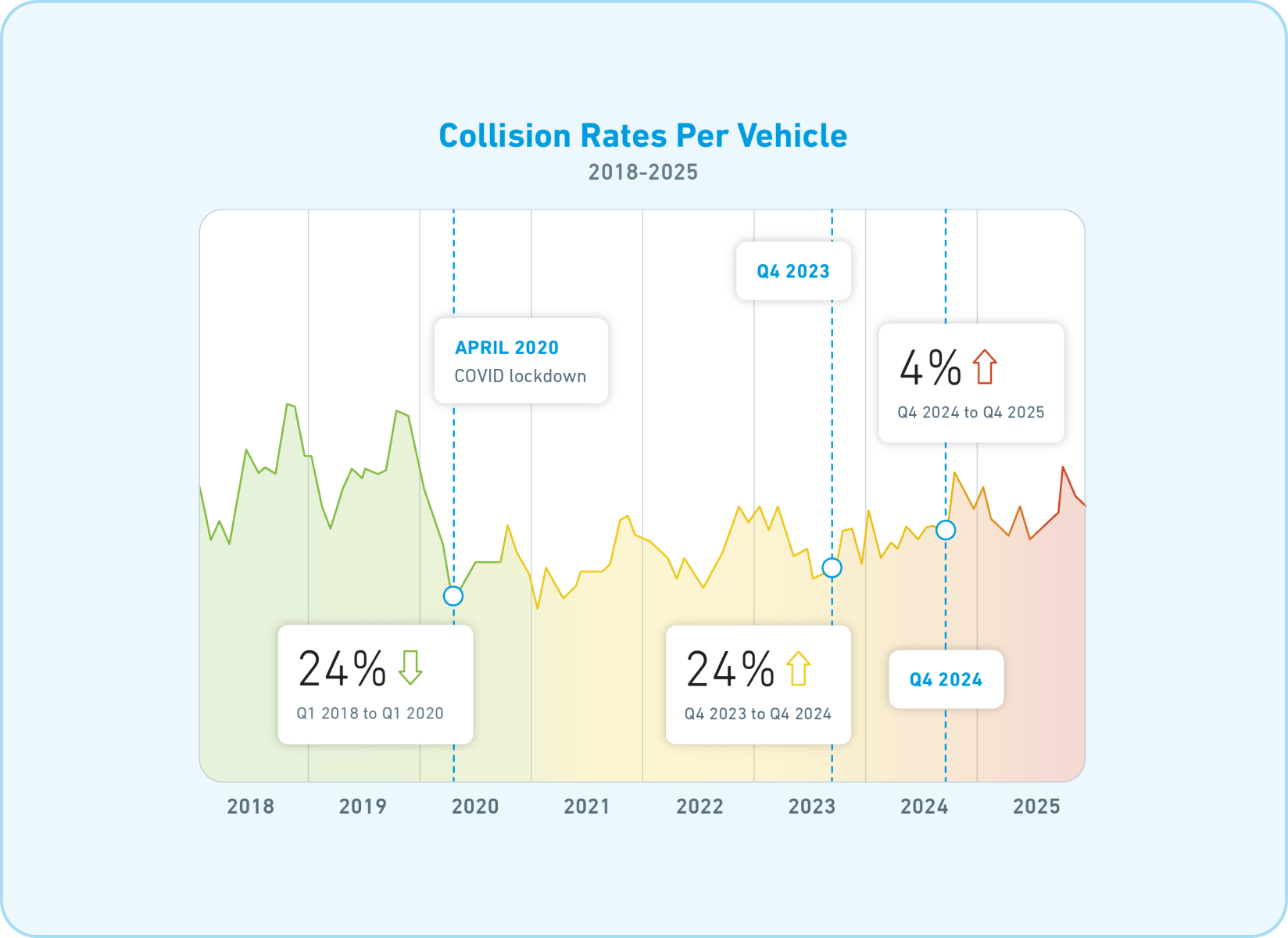
When analyzing fleet risk, each year brings a mix of encouraging progress and emerging exposure. The latest findings from the Lytx® 2026 Road Safety Report show that while fleets are successfully reducing severe crashes and improving core driving fundamentals, operational pressure, distraction, and rising mileage continue to shape overall collision trends.
According to the U.S. Department of Transportation (DOT), Americans drove a record 3.324 trillion miles in 2025, a 0.9% increase over 2024. The report is intended to help fleet leaders gain a deeper understanding of where risk is increasing on these crowded roadways — and where safety programs are delivering measurable results — so fleets can prioritize the actions that protect drivers and reduce total cost of operations.
The data for our 2026 Road Safety Report was sourced from Lytx’s comprehensive global driving database, which encompasses more than 341 billion miles of analyzed data from 6.3 million drivers in over 90 countries.
Key Highlights for Fleet Managers
- Collision rates per vehicle rose only 4% in 2025
- Higher severity collisions declined while lower severity collisions increased by 16%
- The construction industry saw the steepest collision increase at 28%
- Near collisions declined by 23% across all sectors
- Inattentiveness jumped up by 168% as a contributing risk factor
.png?language=en-US "2603-900-1419_asset-01-(1).png")
For more insights, including collision trends, emerging risk patterns, leading risk factors contributing to collisions, as well as where and when risks occur most frequently, download the Lytx 2026 Road Safety Report.
Impact on Fleets
Driving trends have direct operational and financial consequences: Higher collision rates mean worker injuries, increased insurance premiums, claims costs, and downtime. Near collisions and low-severity crashes disrupt schedules and strain resources. Fuel inefficiency from aggressive driving and unnecessary idling adds costs.
Why it matters: Without proactive safety measures, these trends can erode profitability and put drivers at risk. A robust fleet safety solution isn’t optional — it’s essential.
How Lytx Helps
Lytx offers industry-leading video telematics and fleet safety solutions designed to prevent risky behaviors before they lead to collisions. By combining data-driven insights with in-cab alerts, Lytx empowers fleets to stay ahead of risk, versus simply reacting to it. These solutions include:
- Real-time alerts†
- AI-powered risk detection
- Structured coaching workflows
- Video evidence
- Unified fleet management solution
In 2025, Lytx helped its clients, across fleets, achieve an estimated*:
- $725M in fuel costs
- $1.9B savings on claims
- $527M savings on vehicle maintenance
Dynamic Risk Technology: A Game-Changer for Fleets
Lytx Dynamic Risk technology takes fleet safety to the next level by adding environmental context to driver behavior analysis. Here’s how it benefits fleets facing today’s unpredictable conditions:
- Real-time awareness: Combines machine vision, AI, and regional weather data to deliver alerts† about changing conditions before they escalate
- Context-aware scoring: Layers environmental data on top of driver behavior to produce a weighted score that reflects true risk severity
- Proactive hazard management: Helps fleets be more prepared for the chaos drivers face on the road
- Fairer coaching: Adds context to behavior scores, improving trust and engagement
- Operational savings: Avoiding even one weather-related accident can save fleets $200,000–$300,000 in damages and liability costs**
FAQs
Why are collisions increasing?
Increase traffic volume leads to increased congestion and subsequently, reduced following distance. Without the necessary following distance buffer, more collisions occur. Other recent driver behavior trends, like increased road rage, also contribute to a rise in collisions.
What are collision severity levels?
Collision Severity Levels
- Level 1 High crash severity
- Level 2 Moderate crash severity
- Level 3 Minor crash severity
- Level 4 Low crash severity
How can fleets reduce risk?
Early coaching, in-cab alerts, and recognition of safe driving are proven strategies. Fleet safety solutions like Lytx can help identify and prevent risk, and provide efficient coaching workflows to help correct risky driving behaviors.
What role does weather play in collisions?
Fog, snow, and rain significantly increase risk. Fog alone makes severe crashes nearly three times more likely.
Are near collisions always bad?
Not necessarily. They can also indicate when drivers are taking proactive measures to avoid crashes.
How does Lytx technology help during poor weather?
Real-time alerts† and AI-driven monitoring help drivers adjust speed and following distance, reducing risk in adverse conditions. Lytx also provides severe weather alerts within a configurable area that suits your fleet’s needs.
Read how Lytx helps with Dynamic Risk.
†The MV+AI technology and associated services are a driver aid only. Drivers should never wait for a warning before taking measures to avoid an accident. See www.lytx.com/legal/driver-information.
*Results not guaranteed and vary by client. These estimates are Lytx internal and based on a sampling of Lytx client data.
**This is based on customers’ view in the carrier industry. Results may vary by customer.